
A Gothic Guide to Holiday Decorating: Victorian Mourning Meets Festive Cheer
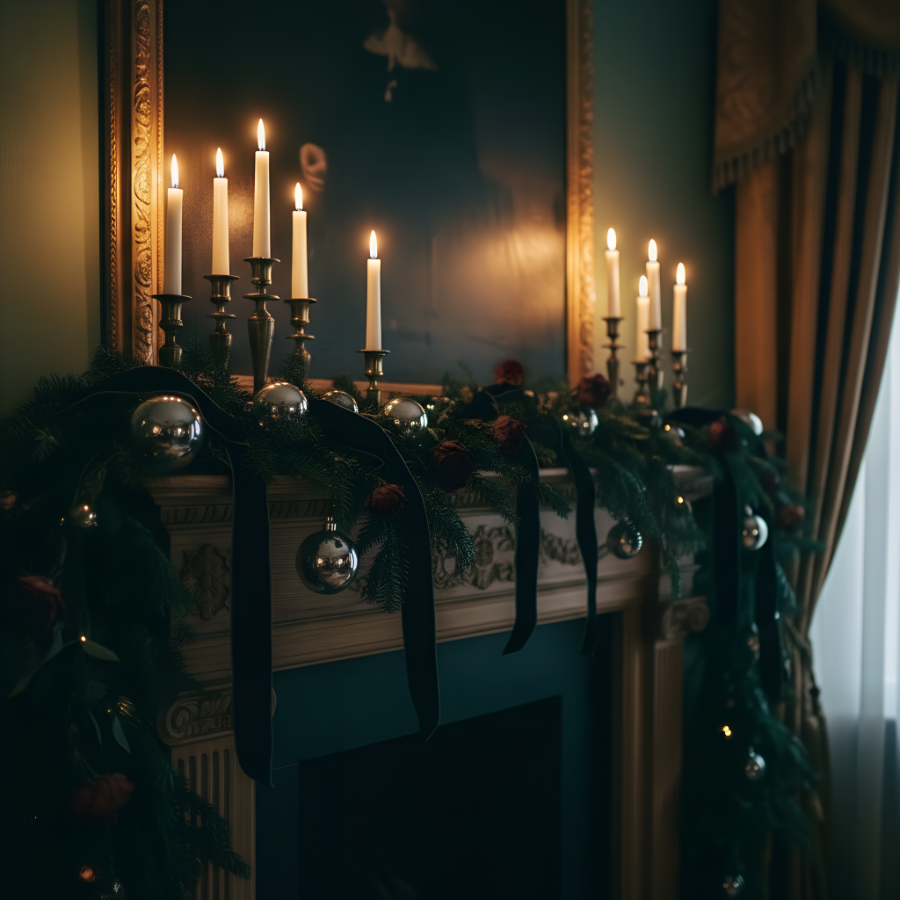
Candlelight catches the edge of a velvet ribbon. Somewhere beneath the tree, a mercury glass ornament reflects the flame—soft, warped, otherworldly. The air smells of pine and something spicier, perhaps clove, perhaps mystery. On the mantel, dried roses hold their shape like memories refusing to fade.
This is the holidays, but darker. Lovelier. The kind of decorating that doesn't shout from the rooftops but murmurs from the shadows, inviting you closer.
If you've ever wanted your seasonal décor to feel less like a department store window and more like a candlelit séance hosted by someone with impeccable taste, you're in the right place. We're blending Victorian mourning aesthetics with festive warmth—think black velvet and evergreen boughs, tarnished brass and twinkling lights. The goal? A home that feels both celebratory and gently haunted, without accidentally recreating a Halloween prop warehouse.
Let's begin.
The Aesthetic in Brief
Victorian mourning wasn't morbid—it was theatrical. The Victorians transformed grief into art, draping themselves in black bombazine, wearing jewelry woven from the hair of the departed, and designing garden cemeteries as monuments to beauty. Death deserved an aesthetic, and they gave it one: textures of velvet and lace, the patina of aged metals, symbolic restraint that whispered rather than wailed.
Now imagine borrowing that sensibility for the holidays. The deep jewel tones, the sumptuous fabrics, the sense of ritual—but lit by the warm glow of candles and softened by evergreen boughs. It's the romance of a Victorian parlour meeting the cheer of a midwinter celebration, and somehow, against all odds, they get along famously.
The key is balance. Too much darkness and you'll feel like you're hosting Christmas in a mausoleum. Too much sparkle and you lose the moody elegance entirely. But get it right, and you'll have a home that feels layered with meaning—festive, yes, but also intimate, atmospheric, and just a touch uncanny.
Your Palette: Dark Foundations, Luminous Accents
Every Gothic holiday scheme starts with choosing your colours. Think of it as selecting a spell's ingredients—the right combination creates magic; the wrong one creates chaos.
Option One: Black + Deep Green + Antique GoldThe classic. Black provides your dramatic foundation, evergreen your connection to the season, and antique gold (think tarnished brass, aged metallics) adds warmth without brightness. This palette practically is a Victorian Christmas.
Option Two: Oxblood + Smoke Gray + BrassRicher, more romantic. Burgundy conjures Victorian opulence, smoke gray keeps things from feeling heavy, and brass hardware grounds everything in vintage authenticity. Perfect if you find pure black too stark.
Option Three: Midnight Blue + Silver + Candle-IvorySofter, dreamier. The blue offers Gothic depth while silver ornaments and mercury glass provide sparkle. Ivory candles balance the darkness with gentle warmth. This palette whispers of winter nights and starlight.
Whichever you choose, follow the alchemist's formula: 70% deep tones, 20% neutrals, 10% shine. The darkness should dominate, the neutrals should breathe, and the metallics should catch the light just enough to make everything glow.
Fun Fact Cauldron:The Victorians loved glitter. They'd crush glass and add gold leaf to ornaments, specifically because gaslight reflected so spectacularly off sparkly surfaces. Red and green became Christmas standards partly because those colours looked beautiful under gaslight—unlike pale yellow or purple, which turned muddy in the warm glow.
Textures That Do the Heavy Lifting
Here's a secret: in monochromatic schemes, texture becomes everything. Without varied surfaces, even the most dramatic colour palette falls flat. Your materials need to earn their keep.
Velvet is your workhorse. Runners, ribbons, stockings, tree skirts—velvet belongs everywhere. It absorbs light in a way that feels luxurious and historical, immediately elevating whatever it touches. Deep emerald, burgundy, midnight blue, or black velvet stockings on your mantel will do more atmospheric work than a dozen other decorations combined. (This year's trend alert: oversized velvet bows are having a moment. Trees, wreaths, chair backs, even artwork—if you can tie a bow on it, tie a velvet one.)
Lace provides contrast. Antique doilies under vignettes, black lace table runners, sheer gauze draped over shelves—these delicate elements soften all that velvet richness. Lace has its own Gothic history, too. It was once convent art, taught to impoverished women during the Irish famine, and became ubiquitous in Victorian homes as a symbol of both refinement and sentiment.
Aged metals anchor everything. Tarnished brass candleholders, wrought iron candelabras, frames with genuine patina. The key word is aged—avoid anything too shiny or new. If you can't find vintage pieces, create the look yourself: paint items with black matte first, then dry-brush metallic paint over the high points. The black settles into crevices, creating instant antique character.
Worn wood and natural elements bring warmth. Dark wood frames, serving pieces, and furniture prevent your space from feeling too theatrical. Blackened branches make dramatic statement pieces—either spray-painted or naturally sourced—and remind us that nature, too, participates in the season's darkness.
The rule of thumb: fewer pieces, richer materials. One velvet runner and a pair of brass candlesticks will always feel more elegant than a dozen plastic decorations. Quality whispers; quantity shouts.
Candlelight as Main Character
Nothing creates atmosphere quite like flames. The Victorians knew this—they decorated their Christmas trees with actual lit candles, which seems wildly dangerous but certainly committed to the aesthetic. We can achieve similar drama with considerably less fire risk.
Layer your lighting. Tall tapers on the dining table, clusters of votives on shelves, pillar candles at varying heights on the mantel. String lights become your "stars," weaving through garlands or tucked behind decorative elements. The goal is depth—light shouldn't come from one source but from everywhere, soft and ambient.
Choose your candle colours carefully. Matte black candles create sophisticated contrast against brass holders. Ivory and cream provide warm glow without the starkness of bright white. Deep red or burgundy adds Gothic romance. For extra authenticity, seek out tapers with distressed finishes—scalloped edges, uneven drips, flat or melted-looking tops that suggest they've been burning in this parlour for decades.
Use mirrors strategically. Position them opposite or beside candle groupings to double your light output. A mantel arrangement might centre around a vintage mirror flanked by candlesticks of varying heights, creating a focal point that practically glows. Smoky or antiqued mirrors soften the reflection for an even moodier effect.
And yes, if flames make you nervous (or you have curious cats, small children, or simply value not burning your house down), flameless candles have evolved remarkably. The best options feature realistic flickering flames, timers, remote controls, and actual wax construction. No one will know the difference in candlelight, and you can leave them burning through dinner parties without a single anxious glance.
Dried Florals and Winter Botanicals
Fresh flowers are lovely, but dried florals are magical. They last the entire season (and beyond), require no maintenance, and have a naturally moody, time-worn quality that fresh blooms can't replicate.
The dried flower essentials:
- Roses retain their colour beautifully when dried, especially in burgundy and deep red
- Hydrangeas dry into delicate, papery blooms that add volume
- Baby's breath provides airy, delicate texture
- Lunaria (honesty) offers silvery seed pods for a frosty effect
- Amaranthus cascades in rich reds—perfect for garlands and wreaths
Your botanical accents:
- Eucalyptus (dried or preserved) provides a greenery foundation with gorgeous scent
- Dark berries in black, burgundy, or deep purple add moody punctuation
- Pine and magnolia leaves connect you to traditional Christmas while maintaining the darker palette
- Blackened branches create dramatic height in tall vases
Arrangement ideas:Create a low, sprawling centerpiece for your dining table—dried florals arranged horizontally with candles interspersed. Hang bundles on doors or walls, tied with velvet ribbon. Make mini posies for place settings, each one tied with a scrap of black ribbon. Weave individual stems through your tree branches. The possibilities are endless, and the arrangements become more beautiful as they age.
Fun Fact Cauldron:Victorian women created elaborate pressed flower art, preserving blooms in scrapbooks or framing them under glass. The practice combined botanical interest with sentimentality—flowers from special occasions were pressed and kept as keepsakes. You can do this yourself with fresh flowers and a heavy book (or a microwave, if patience isn't your virtue).
Ornaments and Antique Sparkle
Modern ornaments are fine. But antique ornaments—or their clever reproductions—possess a quality that plastic simply cannot replicate.
Mercury glass is your best friend. These double-walled ornaments, coated with silver nitrate like mirrors, have been made since the Victorian era. Hand-blown vintage pieces are slightly irregular, charmingly wonky. Look for narrow necks, small caps, and stamps reading "Poland," "Germany," or "West Germany" on the metal toppers. Shapes range from classic balls and teardrops to figurals: grapes, houses, pinecones, even tiny Father Christmases.
You can find genuine vintage pieces at estate sales, antique shops, and eBay (expect to pay £20+ for large hand-painted balls in good condition). But quality reproductions exist too—Shiny Brite reissues at West Elm, or seasonal finds at TJ Maxx and Hobby Lobby.
The curation principle: Mixing eras works beautifully. Combine true antiques with newer pieces, using one modern anchor colour for cohesion. Maybe all your ornaments share burgundy as a common thread, whether Victorian or contemporary. The key is patina over plastic—prioritize glass, metal, velvet, and matte finishes over anything too shiny or synthetic.
And remember: negative space is your ally. A tree with fewer ornaments, carefully chosen and thoughtfully placed, always feels more intentional than one crammed with decorations. Let the branches show. Let the eye rest. Curate, don't clutter.
Room by Room: A Quick Tour
The EntrywayYour first impression. Hang a wreath with dark velvet ribbon—burgundy or black—on an evergreen base. (Or go monochromatic: a black floral wreath with a textured velvet bow.) On a console table, create a candle vignette: clustered holders of varying heights surrounding a bowl of mercury glass ornaments. If space allows, a mirror brightens the entry and reflects any sidelight or candle glow.
The MantelBalance is everything here, but interesting balance. Try symmetrical candleholders on either end with one "odd" statement object in the centre—an urn, an ornate frame, a vase of blackened branches. Drape a garland of black beads or faux black eucalyptus along the mantel's edge. Replace traditional red stockings with velvet ones in emerald, burgundy, or midnight blue. If you have a mirror above the mantel, let it anchor the whole arrangement, amplifying your candlelight.
The Dining TableStart with a velvet runner—black, burgundy, or deep green—laid over bare wood or a dark tablecloth. Cluster candles down the centre at varying heights: tapers, pillars, votives in brass or black holders. Add a low dried floral garland running the table's length. For place settings, consider black lace doilies under plates, handwritten tags on black cardstock, velvet ribbon tied around napkins. Crystal goblets or black glassware complete the Gothic tablescape.
The Tree (If You Dare)Dark ribbon garlands cascading from top to bottom. Fewer colours, more texture—limit yourself to two or three shades maximum. Mix vintage mercury glass with matte black ornaments and antique gold accents. Choose warm amber fairy lights instead of bright white. A vintage lace tablecloth wrapped around the base makes an elegant alternative to a tree skirt. For the truly committed: a black tree becomes a canvas for metallic and jewel-toned ornaments.
Signature Gothic Touches
These small details separate "decorated for the holidays" from "transported to another era."
Victorian mourning nods:
- Black velvet ribbon tied around vases, frames, and ornament necks
- Cameo silhouettes in ornate frames (the Victorians adored these profile portraits)
- Pressed flower art in vintage frames
- Handwritten tags using black ink on tea-stained paper
Decorative accessories:
- Vintage mirrors with aged patina, positioned to reflect candlelight
- Apothecary bottles on shelves—fill with dried flowers, fairy lights, or leave empty
- Ornate frames around artwork, mirrors, or nothing at all (the frame becomes the art)
- Stacks of leather-bound or dark-spined books as décor elements
A word on avoiding clichés: Unless you're specifically going for "haunted house," skip the jump-scare ravens, plastic skulls, and anything that reads as Halloween rather than Gothic. The aesthetic we're creating is elegant, not spooky. Mourning jewellery wasn't meant to frighten—it was meant to honour, to beautify grief. Channel that restraint. Subtle over obvious. Whispers over screams.
Ritual Reads Recommends:A Christmas Carol by Charles Dickens remains the perfect Gothic holiday text—ghosts, redemption, and Victorian London in all its shadowy glory. Read it by candlelight with mulled wine. You're welcome.
Budget Tiers and Sourcing Ideas
Budget (Under £50):Thrift shops are your treasure troves. Hunt for ornate frames in gold or black, brass candleholders, vintage linens. Buy velvet ribbon by the yard from fabric shops and make your own bows. Purchase fresh flowers from the grocery store and dry them yourself—hang bundles upside down in a dark place for two weeks, or press them between heavy books. DIY mercury glass effect with clear ornaments, metallic spray paint, and vinegar water.
Mid-Range (£50-150):Invest in quality mercury glass ornaments—genuine vintage from Etsy or local antiques, or high-quality reproductions. A set of brass candlesticks in varying heights. Quality velvet by the yard for runners and stockings. Pre-dried professional floral arrangements from wholesale suppliers. Flameless candles with timers and realistic flames.
Splurge (£150+):Real velvet textiles: custom runners, tree skirts, stockings. Antique ornaments—genuine Victorian pieces or early twentieth century mercury glass, especially figurals. A statement candelabra in brass or wrought iron. Commissioned pressed flower art. Antique furniture pieces with authentic patina.
Make It Yours
Here's the truth about decorating: rules are suggestions, and the best spaces feel personal. Maybe you have your grandmother's lace tablecloth, or a single ornament that survived your childhood. Maybe your "Gothic" is midnight blue rather than black, or you prefer artificial candles exclusively because you once witnessed a curtain fire at a dinner party. (Fair.)
The mourning Victorians understood something we sometimes forget: objects carry meaning. Their jewellery wasn't just beautiful—it was sentimental, symbolic, deeply felt. Bring that same intention to your holiday decorating. Choose pieces that mean something to you, even if they don't perfectly match the aesthetic. Imperfection is human. A perfect Gothic parlour designed by a stranger would feel cold; one built slowly over years, reflecting your own peculiar taste, becomes a genuine sanctuary.
Start small if you're new to this. Pick one focal point—the mantel, perhaps, or the dining table—and focus your efforts there. You don't need to transform your entire home in a single season. Build your collection gradually, adding meaningful pieces each year. The vintage mercury glass ornament you find at an estate sale this December becomes part of next year's tradition, and the year after that, and so on.
Soft light. Dark velvet. The kind of cheer that whispers.
That's the Gothic holiday home: celebratory, yes, but also mysterious. Warm, but with shadows. A place where the candles flicker, the dried roses hold their shape, and the holidays feel less like an obligation and more like an enchantment.
Now go forth and decorate—darkly.
Stay connected with Ritual Reads
Be the first to hear about newly conjured titles, upcoming gatherings, and curated recommendations from our shelves.
Community voices
What our future community is saying.