What Makes Gothic Literature Gothic? A Reader's Guide to the Genre's DNA
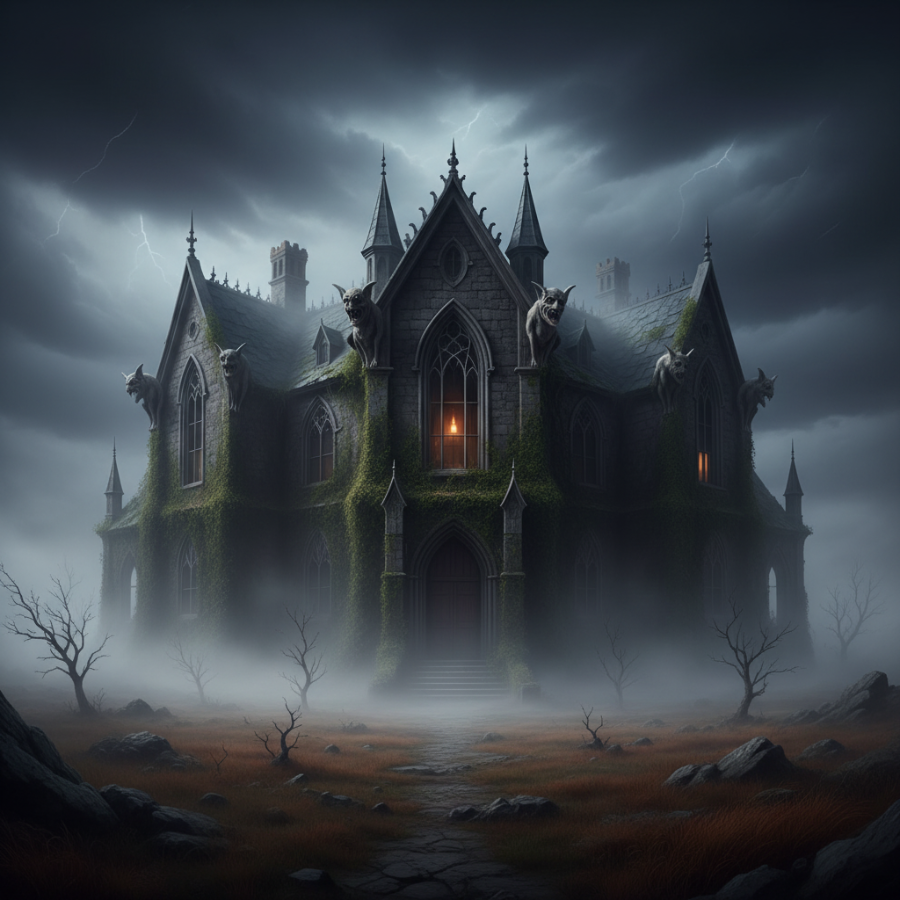
The fog rolls in. Somewhere behind you, a door creaks open—one you're certain you locked. There's a letter on the mantelpiece bearing your grandmother's handwriting, though she's been dead for thirty years. Your heart hammers. The house seems to breathe around you.
Now, is this creepy? Certainly. Spooky? Without question. But is it Gothic?
That distinction matters more than you might think. Gothic literature isn't simply about haunted houses or things that go bump in the night—it's a specific alchemy of dread and longing that has captivated readers for over two hundred and fifty years. And once you understand its essential ingredients, you'll start recognising Gothic everywhere: in Victorian novels, in modern thrillers, in that film you watched last Tuesday that left you strangely melancholy.
Consider this your field guide. No English degree required—just a healthy appreciation for shadows, secrets, and settings that feel like they might swallow you whole. At its heart, Gothic literature blends horror, romance, and psychological tension, rooted in haunted places and haunted minds. Simple enough to say. Far more delicious to explore.
A Lineage of Shadows
The word "Gothic" didn't start in bookshops. It began in cathedrals—those soaring medieval structures with pointed arches, flying buttresses, and gargoyles glaring down from impossible heights. There was something about that architecture that felt ancient, mysterious, perhaps a little unholy. When writers began crafting tales that captured that same atmosphere of grandeur and dread, the name followed naturally.
Horace Walpole lit the first candle in 1764 with The Castle of Otranto, written after a nightmare at his eccentric Gothic Revival home featuring "a gigantic hand in armour." He initially claimed the book was a translation of an ancient Italian manuscript—because even the genre's founding father knew Gothic stories work better when they feel unearthed rather than invented.
Ann Radcliffe came next, and she rather defined the decade. Known as the "Great Enchantress," her Mysteries of Udolpho (1794) established what Gothic could do: terrorise readers with atmosphere while explaining away the supernatural by the final chapter. Her approach was so influential that Gothic novels of the era were simply called the "Radcliffe school."
Then Mary Shelley, at the criminally young age of eighteen, gave us Frankenstein—a book that revitalised the genre and added scientific hubris to Gothic's toolkit. The Brontë sisters hauled Gothic into the Yorkshire moors with Jane Eyre and Wuthering Heights, proving the genre could be deeply romantic and deeply unsettling in the same breath.
Edgar Allan Poe took Gothic to America and into the unreliable mind. Victorian writers like Bram Stoker and Robert Louis Stevenson used Gothic to examine fears about science, sexuality, and what lurked beneath respectability's polished surface. The twentieth century brought Southern Gothic; today we have urban Gothic, domestic Gothic, and psychological thrillers wearing Gothic's well-tailored coat.
The settings change. The essential DNA stays remarkably consistent.
The Haunted World
If Gothic literature had a real estate portfolio, it would consist entirely of properties no sensible person would buy. Isolated castles with too many locked rooms. Crumbling mansions at the end of overgrown drives. Monasteries where the bells haven't rung in centuries. Moors stretching endlessly under bruised skies.
Fun Fact Cauldron:Horace Walpole's Strawberry Hill House, which inspired The Castle of Otranto, still exists in Twickenham, London—and yes, you can visit. The Gothic Revival architecture remains gloriously eccentric, complete with fan vaulting that took Walpole decades to complete.
These settings aren't merely backdrops. In Gothic, the place is a character—arguably the most important one. Labyrinthine corridors represent psychological distance, the impossibility of truly knowing another person. Cracked walls suggest fractured families. Hidden chambers stand in for repressed memories. The architecture becomes a mirror for the mind.
Modern Gothic translates this beautifully. A rundown motel on an empty highway works just as effectively as a medieval fortress when isolation and decay are what you're after. A glass high-rise can be as claustrophobic as any dungeon. What matters is that the environment feels oppressive, inescapable, and somehow alive.
Weather plays its part too. Gothic adores what literary types call "pathetic fallacy"—the attribution of human emotions to nature. Storms rage when passions do. Fog obscures truth. Candlelight flickers at precisely the wrong moment. The environment doesn't simply set mood; it actively participates, trapping characters and confusing their senses.
Most importantly, Gothic atmosphere prioritises sustained unease over shock. This isn't the genre of jump scares. It's the genre of mounting dread, of melancholy that settles into your bones. Ann Radcliffe believed terror, rather than outright horror, was the path to heightened emotion. The suggestion of danger often disturbs more than the danger itself.
Who Haunts the Story
Gothic character archetypes have proven remarkably durable. You'll recognise them the moment they stride onto the page—or skulk, depending on their particular dramatic flair.
The Byronic hero looms largest—intense, flawed, morally ambiguous, nursing some delicious dark secret. Proud, moody, cynical, haunted by guilt or obsession, charismatic yet self-destructive. Heathcliff embodies the type perfectly. So does Mr Rochester, though he'd likely resent the comparison.
Then there's the innocent protagonist—often young, frequently female, always curious and absolutely out of her depth. She arrives at the mysterious estate and begins uncovering secrets the house would rather keep buried. She's the reader's lens, and her naivety ensures we discover horrors alongside her.
Villains come in several flavours: cruel guardians, manipulative lovers, fanatical religious figures, scientists who've pushed too far. What makes Gothic villainy interesting is its tendency to blur—the monster may be sympathetic, the boundary between victim and villain shifting like fog.
Ghosts appear both literally and metaphorically—specters and vampires, yes, but also madness, family secrets, inherited trauma. The supernatural often stands in for real anxieties about death, desire, and power. Victorian vampires, for instance, frequently served as metaphors for fears about female sexuality and social upheaval.
Finally, there's the unreliable narrator. Gothic loves a storyteller you can't quite trust—one who might be lying, hallucinating, or simply mistaken. Is the governess in The Turn of the Screw seeing actual ghosts? Scholars have debated this for over a century. Poe's narrator in "The Tell-Tale Heart" insists he's not mad, which convinces us absolutely that he is. This uncertainty is fundamental to Gothic's tension.
What Gothic Is Really About
Strip away the mansions and brooding gentlemen, and Gothic explores certain recurring obsessions.
The past won't stay buried. Ancient curses, old crimes, family secrets, inherited guilt—they refuse to remain in history where they belong. The past invades the present through discovered diaries, unearthed letters, unexpected apparitions. Gothic time isn't linear. What happened generations ago can reach forward and grab you.
Fear and desire intertwine. Gothic explores what happens when attraction and terror occupy the same space—forbidden love, desires society has labelled dangerous or improper. We're drawn to what threatens us. Gothic asks why.
Fun Fact Cauldron:Mary Shelley was only eighteen when she began Frankenstein, conceived during the famous ghost story competition at Villa Diodati. That gathering also produced John Polidori's The Vampyre—the first modern vampire story in English, predating Dracula by nearly eighty years.
Transgression meets consequence. Gothic characters break rules—moral, religious, social, scientific. They experiment beyond ethical boundaries, love the wrong people, defy expectations. The horror emerges from aftermath. What is repressed will return. There will be a price.
Power and entrapment pervade every corner. Characters find themselves trapped by abusive relationships, oppressive families, rigid hierarchies, and physical environments. Locked rooms. Binding contracts. Marriages as cages. The imagery of imprisonment runs through Gothic like a recurring nightmare.
Gothic also occupies the crack between faith and doubt. Rational explanations clash with eerie phenomena. Certainty fails. This tension suggests that beneath the veneer of reason lurks an unreasonable universe of repressed desires and unexplainable experiences.
How Gothic Plots Work
Most Gothic plots revolve around unveiling a central secret—someone's hidden identity, a crime committed generations ago, monstrous family history. The pacing tends toward gradual revelation: hints dropped, suspicions raised, small discoveries building toward larger ones. Gothic doesn't rush. It lets dread accumulate.
Nested narratives appear constantly: letters, journals, confessions, second-hand accounts. This structure creates deliberate distance and doubt. We're reading someone's account of someone else's account, and each layer introduces possible distortion.
Physical journeys mirror psychological ones. The protagonist explores hidden rooms while descending into fear or the darkness of her own psychology. Gothic loves literal descent—basements, catacombs, underground passages—because going down resonates with exploring the unconscious.
Endings rarely achieve clean resolution. Evil may be defeated, but at cost. Questions remain unanswered. The haunting doesn't entirely lift.
Same DNA, New Bodies
Gothic has proven endlessly adaptable.
Classic Gothic gave us remote castles, aristocratic families, and delicious melodrama. Southern Gothic transplanted the formula to decaying plantations and small towns, replacing overt supernatural with social decay, racism, and moral hypocrisy. Contemporary Gothic has moved into apartments and psychological interiors—ghosts become digital traces or internalised trauma, protagonists navigate corrupt systems rather than flee them.
Gothic crosses freely into other genres now. Gothic romance, horror, fantasy. YA Gothic. Queer Gothic, which reclaims historically damaging tropes to express queer experiences. Each variation uses the established toolkit to explore contemporary concerns about identity, mental health, sexuality, and society.
What remains constant? Haunted spaces. Haunted people. The unease of living with what we'd rather not face.
Spotting Gothic in the Wild
Ask yourself: Does the setting feel like a character—crumbling, isolated, somehow breathing? Are there secrets from the past refusing to stay hidden? Do characters wrestle with forbidden desires or social taboos? Is the mood concerned with sustained unease rather than sudden shocks? Are you unsure what's real versus imagined?
If you're answering yes to several of these, you're in Gothic territory—or at least standing on its foggy doorstep, watching something flicker in an upstairs window.
Reading Pathways
For the classic castle experience, start where the genre started: Walpole's The Castle of Otranto is brief and foundational. Ann Radcliffe's The Mysteries of Udolpho rewards patience with atmosphere you could cut with a knife. Stoker's Dracula remains compulsively readable.
For psychological tension over overt supernatural threat, try Charlotte Brontë's Jane Eyre, Daphne du Maurier's Rebecca, or Shirley Jackson's The Haunting of Hill House—each a masterclass in suspense.
Ritual Reads Recommends:Mexican Gothic by Silvia Moreno-Garcia — A perfect contemporary entry point. Moreno-Garcia takes the haunted mansion and its sinister inhabitants, then weaves in postcolonial critique and genuinely unsettling body horror. The atmosphere is immaculate; the protagonist is wonderful.
For the best Gothic experience, read slowly. Savour atmosphere. Watch for recurring symbols and how the past keeps intruding. Notice who's telling the story and what they might be hiding.
Why Gothic Still Haunts Us
Return to that opening image: fog, a creak, a letter from someone dead. You can diagnose it now. The isolated setting. The past refusing to stay buried. The atmosphere of dread rather than shock. Gothic, unmistakably.
The genre endures because it provides what little else does—a safe space to confront fears we can't easily articulate elsewhere. Gothic lets us explore the dark side, examine what society would rather not acknowledge. It gives form to anxieties about our place in a world that often feels unreasonable beneath its rational surface.
Haunted places. Haunted minds. Forbidden desires. The past that never quite dies. These elements have been with Gothic since Walpole dreamed of that gigantic armoured hand, and they'll remain long after we've moved on to settings we can't yet imagine.
So go ahead. Pick up that book with the crumbling mansion on the cover. Accept the governess position. Explore the locked room. Let yourself be a little haunted.
The fog is always rolling in somewhere. Gothic will be there to meet you.
Stay connected with Ritual Reads
Be the first to hear about newly conjured titles, upcoming gatherings, and curated recommendations from our shelves.
Community voices
What our future community is saying.